Omni Know-How
October 28, 2026

Games have always been the best way to engage HCPs. Now they’re the best way to reach them.
I’m a professional dopamine dealer.
That’s how I opened my talk at DHC Disrupt. I’ve spent my career learning how games capture attention, teach people complicated things, and make them want to come back for another round.
For the last decade, we’ve used that machinery to engage physicians. Now we can put games in front of them where they already spend their time: inside the casual mobile games they play every day.
Doctors are people, too
Physicians are people. We forget that. They play Candy Crush and Wordle on their phones between everything else in their day. 58% of HCPs play casual games - which is right on par with the rest of the US population.
We’ve known how to engage clinicians with games for years. We’ve built games around diagnosis, treatment decisions, MOA, clinical study data…
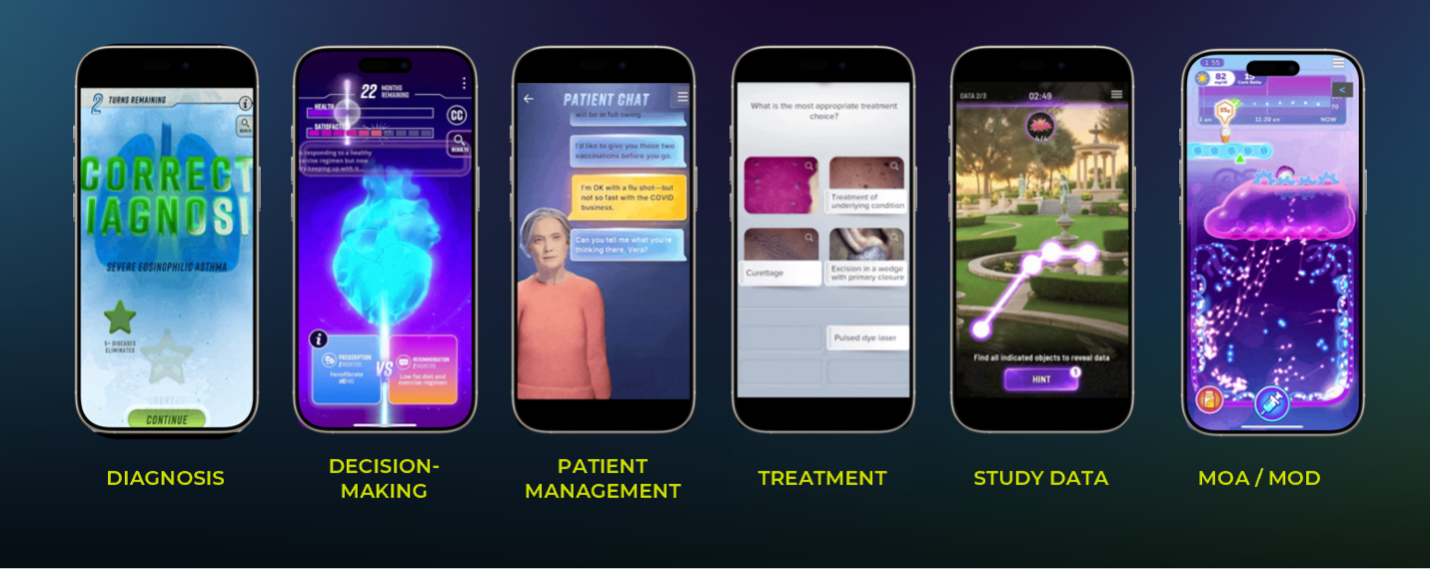
Tens to hundreds of thousands of HCPs have played them. We measure engagement in minutes, while the other digital channels are counting seconds or fractions thereof.
Why does it work? A game gives you a goal, a challenge, and immediate feedback. You make a decision. You see what happens. You try again. Games trigger the brain’s reward system when we solve something. That dopamine hit says: do that again. The games industry has spent decades tuning that loop across more than three billion players. We know how to make people focus, practice, and come back.
I’ve spent a decade showing what games can do once a physician is playing. We build experiences around diagnosis, treatment decisions, and clinical study data. HCPs don’t just see the message. They play with it. They make a decision, get feedback, and learn by playing.
And we can point it at the material that matters: an approved patient case, a clinical study result, a disease state. The doctor isn’t watching another message about the decision. The doctor is making the decision. We can put a slightly challenging task around a clinical study result and make the endpoint the payoff. The doctor discovers the result through play. We’ve measured this over and over.
The last green field
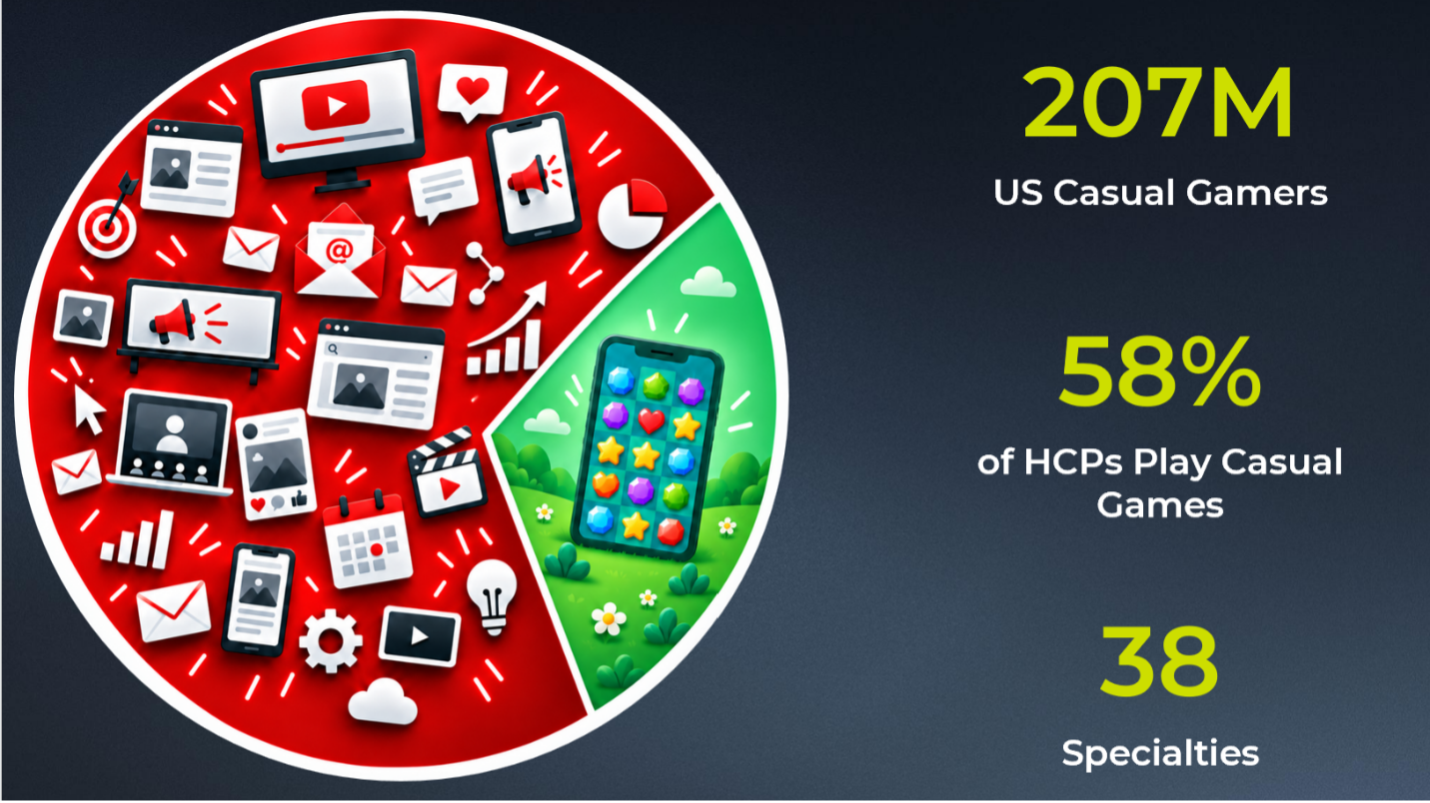
We’re lucky. Doctors spend a double-digit share of their time playing video games. And when they do, they’re playing Candy Crush and Wordle, not Mortal Kombat.
That’s great for us. Why? Because between levels of Candy Crush are playable ads for other games.
Every channel is saturated. Web, video, email. Where is the last green field? Video games. Two-thirds of the U.S. population plays - and so do two-thirds of HCPs (...because they’re humans, and all humans love to play).
If you play mobile games, you know this. Between levels of Candy Crush, you get a playable ad for another game. Now, instead of playing a playable ad for Bibble Bobble Bubble Bop, your dermatologist is playing an interactive game about your brand or disease state.
That’s a very different ad. It fills the screen. The physician makes choices. It can be branded, with approved brand or study content, or unbranded, focused on a disease state or clinical decision. Either way, the playable itself is the message.
And whoa boy, do they play. Thousands to tens of thousands of unique gameplays in a matter of weeks. The game data gives us directional insight, at the NPI level.
Some brands use playables to build awareness. Others use them to understand what physicians know and how they think through a case. The point is, we can reach doctors in the games they already play, with an experience that asks them to do something with the clinical information.
That’s the last green field. Doctors are already playing there. So should you.